Cabinetry in Austin, TX
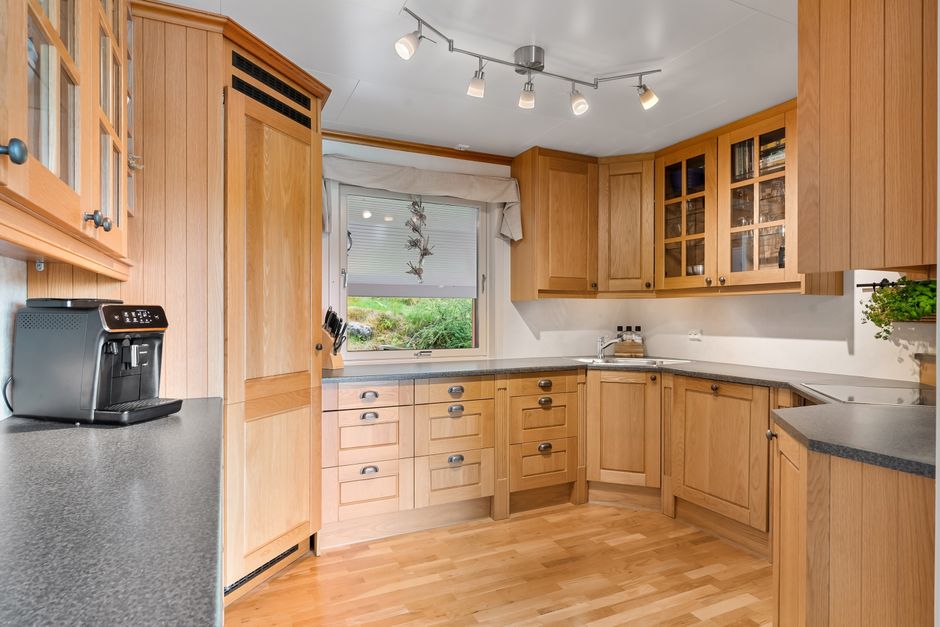
Notes on cabinetry in Austin, TX: vanity, laundry and garage cabinets built for moisture and heat, plus refacing and refinishing existing boxes.
What We Cover
- Pulls, Crown Molding and Light Rail on Finished Cabinets How cabinet pull placement, crown molding and light rail are set so doors clear and trim lines meet cleanly.
- Why Cabinet Bases Swell Near Sinks and Dishwashers Where water gets into cabinet bases, how swelling starts at the edges, and what a moisture-resistant panel changes.
- Garage Cabinets in an Uninsulated Texas Garage Why summer heat in an Austin garage warps some cabinet materials and which garage cabinet builds stay flat.
- Laying Out Laundry Room Cabinets Around Machines and Hookups How to place laundry cabinets, adjustable shelves and a folding counter around washer and dryer connections.
- Refacing or Refinishing Existing Cabinet Boxes How to judge whether sound cabinet boxes in an older Austin home should be refaced, refinished or replaced.
- Choosing a Vanity Cabinet for an Austin Bathroom What holds up under steam and splashes in a vanity cabinet, from panel material to edge banding and the finish coat.
Cabinetry in Austin, TX
Cabinetry in Austin, TX has to deal with a hard climate. Summers bake an uninsulated garage, wet springs push moisture up through slabs, and a shower in a bungalow in Hyde Park or Clarksville fills a small bathroom with steam. The work starts with the room, and the cabinet follows from what that room does to wood, glue and hardware.
Bathrooms and wet zones
A vanity cabinet takes the worst of it. Water finds the cut edge of a panel first, so edge banding, a sealed plywood box and a moisture-resistant panel in the base matter more than the door style. Under a sink the same rules apply, and a swollen toe kick is usually the first sign that a supply line has been weeping for a long time.
Laundry rooms and garages
A laundry cabinet works around machines, a vent and a valve box, with adjustable shelf spacing for bottles and baskets. A garage cabinet works around heat. Houses near Mueller, Travis Heights and Tarrytown often have garages that reach oven temperatures by mid-afternoon, which softens adhesives and bows loaded shelves unless the build is right.
Refacing and refinishing old boxes
Plenty of older homes between Zilker Park, Bouldin Creek and Mount Bonnell have cabinet boxes that are still square and dry. Refacing the doors or refinishing the existing coat can be a sensible route when the carcass is sound, and the finish details such as a cabinet pull, crown molding and light rail change how the run reads. A crew checks the floor, the walls and the ceiling line before anything is ordered, because houses along the Colorado River and up into the Texas Hill Country rarely have a straight reference anywhere.
Guides
The pages here cover vanity cabinets, laundry layouts, garage heat, swollen bases near wet zones, reface-or-replace decisions, and the trim details that finish a run of cabinets in Austin, TX.
Latest Guides
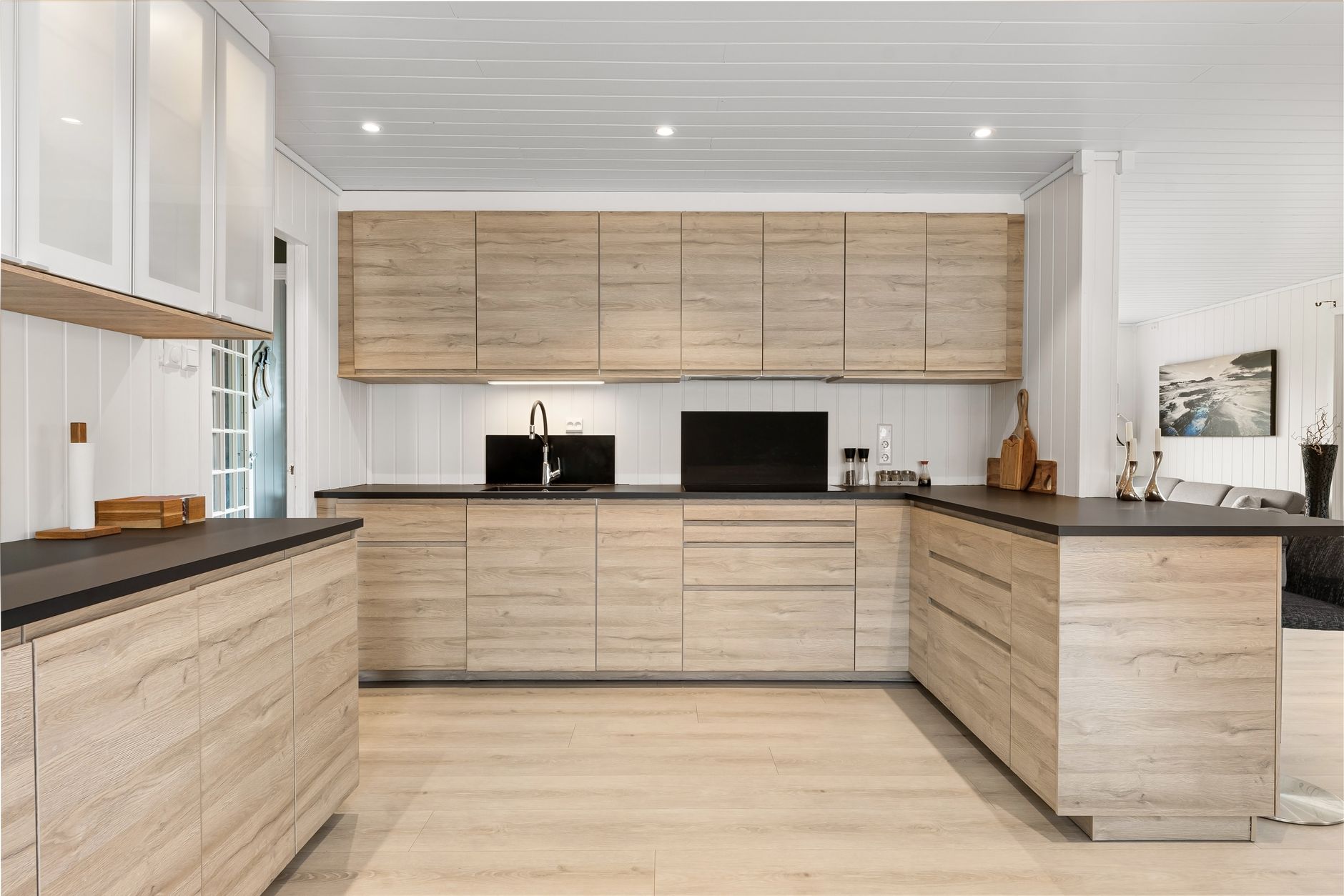
Preparing a Bathroom, Laundry Room or Garage for Cabinet Installation
Cabinets go in quickly compared with how long it takes to get the room ready for them. The walls, floor, plumbing and power decide whether a cabinet run sits square and stays dry, and those problems are far cheaper to find before the boxes arrive. A bathroom, a laundry room and a garage in Austin, TX each pose a different set of problems. This piece walks through what to check in each room, in the order a tradesperson would check it, with the local conditions that make Austin houses behave the way they do.
What should be checked in every room first?
Start with the floor. Lay a four foot level along the wall where the cabinets will stand and mark the high and low points. Houses on the clay east of the Balcones Fault shift with the seasons, and slab floors in Mueller, Hyde Park and Travis Heights often fall a half inch or more across a room. Cabinets can be shimmed to cover a slope, but the shim stack has to be planned, and the toe kick has to be cut to hide it.
Next, find the high point on the wall. A straight run of upper cabinets hung from the lowest point of the ceiling looks level, while the same run hung from the highest point leaves a gap above it that the crown molding has to bridge. Older homes in Clarksville and Tarrytown often have ceilings that drift by an inch over a long wall, so deciding where the crown will be scribed saves rework later.
Then locate the studs and mark them. Wall cabinets are heavy once loaded, and the screws that carry them have to land in framing. A plaster wall in an older house needs longer screws than a modern drywall wall, and a masonry wall needs anchors chosen for it.
How do the three rooms compare?
| Room | Main condition to settle | Typical problem found late | Material that tolerates it |
|---|---|---|---|
| Bathroom | Steam and splashes at floor and sink | A slow supply leak behind the old vanity | Plywood box, sealed edge banding, moisture-resistant panel in the base |
| Laundry room | Hookup positions, vent path and a floor drain or pan | A valve box that sits where a cabinet wants to go | Plywood box with a melamine interior and a sealed bottom |
| Garage | Heat in summer, ground moisture through the slab | A slab that is out of level or sweating at the edges | Plywood box raised off the floor, thick edge banding, heat-rated finish coat |
The table is a summary of the conversation that follows. Each room has a gating question that has to be answered before a single box is ordered.
What does a bathroom need before the vanity goes in?
Open the wall behind the old vanity if it is coming out, and look at the supply valves and the drain. A green crust on a valve or a dark stain on the subfloor means a slow weep, and the cabinet that goes in will fail from that spot unless the leak is fixed first. Replace old stop valves while the wall is open, since they cost little compared with a flooded base.
Check the floor under the old cabinet. Soft spots in the subfloor are common beside a tub or under a drain line. A vanity cabinet is only as good as what it stands on, and a spongy subfloor lets the box rock and the toe kick pull away from the floor. Patch the floor, then seal it, then set the cabinet.
Confirm the ventilation. A bathroom fan that vents into the attic rather than outside leaves moisture sitting over the room, and the vanity absorbs it over time. A fan that is rated for the room size and runs for twenty minutes after a shower does more for a cabinet than a better finish does.
Measure the plumbing cutouts against the drawer layout. A drawer box above a trap needs a cutout in the back or a U-shaped front, and those details have to be drawn before the cabinet is built. A shaker face on a vanity looks simple, but the drawer behind it is the part that takes careful planning.
What does a laundry room need?
Pull the machines out and measure everything behind them. The width of the washer and dryer is the easy number. The depth with the hoses and the vent attached is the number that decides how far forward a cabinet over the machines can sit. The dryer vent should run as straight as possible to the outside, and a crushed or kinked duct is a fire risk as well as a drying problem.
Look at where water would go if a hose failed. A drain pan under the washer with a line to a floor drain is ideal, and a pan without a drain still gives time to notice a leak. A laundry cabinet base next to the washer should have a sealed floor panel so a small leak damages a replaceable part and not the whole box.
Plan the shelf spacing around real objects. An adjustable shelf lets the cabinet follow the bottles and baskets that actually live there, and the pin holes should be drilled at even spacing so the shelf can move. A folding counter over the machines needs a gap at the back for the hoses and a support so it does not flex under a load of towels.
Decide whether the old cabinets in the laundry room are worth keeping. Where the boxes are sound and dry, refacing the doors can cost less effort than replacing the run, and refinishing the boxes brings the room up to date. Where a box has swollen from years of steam, replacement is the better call.
What does a garage need?
A garage in Austin needs a different set of questions. Heat climbs in an uninsulated garage through the summer afternoon, and ground moisture comes through the slab after a wet spring. Cabinets in that room should stand on legs or a raised toe kick so air moves under them, and the back should stand a little off the wall where afternoon sun heats the surface.
Check the slab for cracks and level before anything is set. Slabs on the clay soils east of the Balcones Fault move and crack, and a cabinet run on a cracked, sloping slab needs a leveling plan. Ground west of the fault is rocky and drains faster, which is why garages near Mount Bonnell and the Texas Hill Country edge tend to stay drier than those near the Colorado River.
Think about weight. A garage cabinet holds paint cans, power tools and chargers. Hardware has to be rated well above that load, and wall cabinets have to be fastened into studs with long screws. A hardwood or plywood shelf in birch outlasts melamine over a particleboard core, which bows after a summer under load.
Look at electrical and lighting before the cabinets block access. A run of garage cabinets over an outlet makes the outlet useless, so plan a switch and an outlet for the bench area while the wall is open.
How should deliveries and the install day be planned?
Clear the room completely. A crew that has to work around stored boxes loses an hour on every wall, and the cabinets themselves need a flat staging area. Store the boxes in the room where they will be installed for a day or two before work starts, so the wood and the finish adjust to the humidity there. Cabinets stored in an air-conditioned living room and then moved into a humid garage will move after they are hung.
Lay out the first cabinet from the corner or the tallest point, depending on the room. A run that starts from a straight reference stays straight, and a run that starts from the middle of a crooked wall carries the error to both ends. Check for plumb and level after each box and fasten them together before the run is fastened to the wall.
Leave the finish work for last. Crown molding, light rail, scribe strips and the cabinet pull hardware all go on after the boxes are fixed, because they cover small differences that the install exposes. A pull placed before the doors are aligned gets moved when the doors are adjusted.
What is the short version?
Check the floor, the wall and the water before the boxes arrive, and the install takes care of itself.
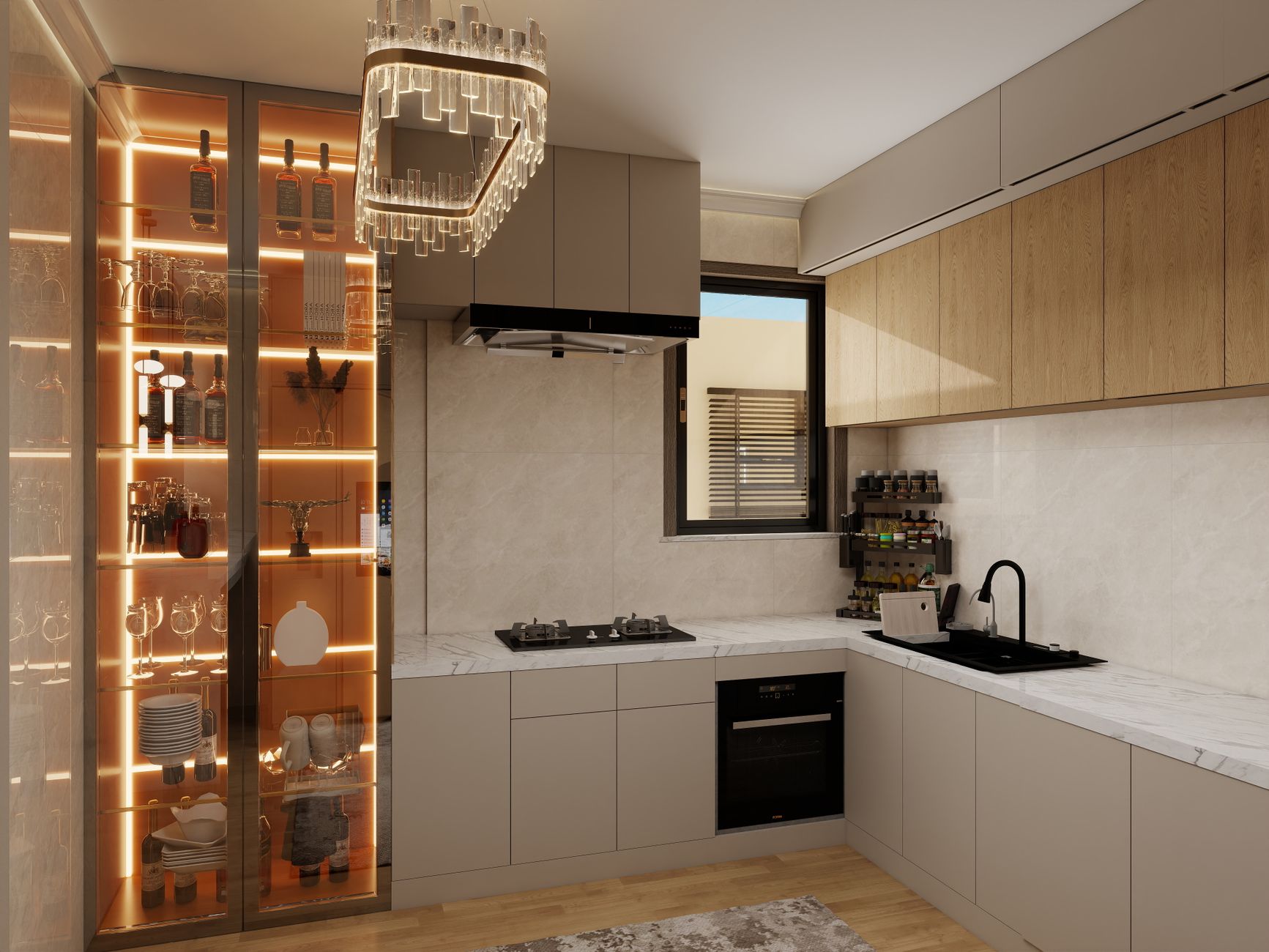
Why Cabinet Doors Shift With the Seasons in Austin
Cabinet doors in an Austin house do not stay where the installer left them. A door that closed with a clean click in March rubs the frame in August, and by January a gap has opened along the top edge. People assume the hinge failed or the house settled. Most of the time the wood moved, and the hardware is doing exactly what it was built to do. This article walks through why doors shift in Austin, TX, how to tell a seasonal change from a real defect, and what a tradesperson does about each one.
Why do cabinet doors change from season to season in Austin?
Wood takes on moisture from the air and gives it back. The humid stretches along the Colorado River and around Lady Bird Lake push a door's moisture content up, and the long dry spells pull it down. A solid wood door or a door frame expands across the grain and barely changes along it, so a rail and stile door grows slightly wider in summer and shrinks in winter while its height stays almost the same.
Air conditioning changes the picture inside the house. A home held at a steady temperature all summer dries the air, so a cabinet in a kitchen can sit drier in July than it did in April. Turn the system off for a week while the family travels and the door swells back. That swing is why the same door can rub in one month and rattle in another.
Sheet goods behave differently. A plywood door barely moves across its face, which is why plywood is the usual choice for large flat slab doors. Mdf moves little with humidity in the face but swells at cut edges if water gets in. Thermofoil and melamine have a plastic skin that hides the movement of the core underneath, and the edge is where the trouble starts.
How can a homeowner tell seasonal movement from a defect?
Seasonal movement is repeatable. The same door rubs in the same spot every humid month and clears in the dry months. A defect does not come and go. A warped door that stays bowed through every season has a built-in stress, usually from a panel that was cut from a poor board or finished on one side only. A door that has dropped because a screw pulled out of the cabinet side stays dropped in every month.
A straightedge settles most questions. Hold a ruler across the back of a door and look for light under it. A bow of more than the thickness of a few sheets of paper is worth watching. A twist, where opposite corners stand off the frame, points to a door that will not settle without a fix.
The reveal, the gap between the door and its neighbor, tells the rest. An even gap that has narrowed on one side is a hinge adjustment. A gap that is wide at the top and tight at the bottom on a door in a run of three is often the cabinet box out of square. Running a level along the face frame separates those two quickly.
What does a euro hinge adjust, and what does it not?
Most modern cabinets use a concealed euro hinge with three adjustment screws. One moves the door in and out from the box, one moves it left and right, and one moves it up and down. A quarter turn of the side screw is often all a rubbing door needs. Overturning a screw is the common mistake, so adjust a little and test the door before touching the next one.
A hinge adjustment fixes position, not shape. It cannot flatten a bowed door or square up a sagging cabinet. A hinge with a soft close damper is more forgiving of small timing differences, but if the door is swelling against the frame, no screw will clear it. At that point the choices are to wait for the dry season, ease the edge with a sharp plane, or replace the door.
Older Austin kitchens, such as those in Hyde Park or Travis Heights, often have inset doors on a face frame, which sit inside the opening with a narrow reveal on every side. Inset doors show seasonal change more than overlay doors because there is almost no room for expansion. A full overlay door, which covers the frame, hides the same movement.
Which finishes and materials resist movement best?
A door finished evenly on both faces and every edge resists moisture swings far better than a door finished on the front only. The finish coat is a moisture barrier as much as a color, so a painted door with a bare back takes on humidity unevenly and curls toward the drier side. Asking whether the back and the edges carry finish is a more useful question than asking about the brand of paint.
A shaker door built with a flat center panel floating in a frame has room to move without cracking the joint. A raised panel door needs the same floating arrangement, and a raised panel that was glued tight into its frame splits the paint at the joint every winter. Hardwood frames in maple, birch or oak move less than softer species, but they still move.
Slab doors in plywood stay flat across the width. A slab door in solid wood, especially a wide one, is prone to cupping, because a wide board has more width to change. Edge banding on a slab door should be continuous, because a lifted corner is where the core begins to take on water.
What about doors that stick only on some mornings?
Doors that stick near a dishwasher or a range are reacting to local steam. A cabinet next to a dishwasher sees a burst of moist air each time the machine vents, and a door beside it can swell for an hour and relax again. A heat shield or a vent strip under the counter reduces the effect. Doors in a bathroom behave the same way after a shower, and a vanity cabinet near a tub swells more than one across the room.
Pantry doors on an exterior wall can sweat in cold snaps, since the wall surface is colder than the room. Cold weather is less frequent around Austin than summer humidity, but a hard freeze every few winters leaves its mark on doors along north walls. A door that behaves differently from its neighbors on the same wall is telling you something about that wall.
When should a loose door or drawer be repaired instead of adjusted?
A door that sags no matter how the hinge is set usually has a stripped screw hole. The cure is to fill the hole with glue and a wooden toothpick or dowel, let it set, and redrive the screw, or to move the hinge to a fresh position. A drawer that drags is a similar story. The drawer slide may be out of alignment, or the drawer box may have swollen at the sides, and one of those needs a screwdriver while the other needs patience.
A dovetail drawer in birch or maple tolerates humidity better than a stapled box in thin board. If the sides of a drawer have swollen and the slide binds, sanding the sides lightly after the humid season passes is better than forcing the drawer. Waxing the runners helps wooden slides, while metal slides want a clean rail and nothing else.
How does this apply to garages and laundry rooms?
An uninsulated Texas garage amplifies every swing. Heat and humidity both climb and fall faster there than in the house, so garage cabinet doors move more and need the most forgiving hardware. A hinge with generous adjustment range and doors of plywood with sealed edges keep a garage cabinet in line through the year. Laundry rooms sit between the two. Steam from the dryer and washer pushes humidity up locally, so laundry cabinets benefit from the same sealed edges as a bathroom vanity.
What is the practical routine?
Check door reveals twice a year, once in the humid months and once in the dry ones. Make small hinge adjustments, one screw at a time, and write down what was changed. Keep the finish intact, because a chipped edge on a door near the sink invites water. If a door stays out of true through a full year, replace it or reface the run, since a door that has taken a permanent set will not recover.
Seasonal movement in Austin is normal and predictable, and a well-built door absorbs it without complaint.