Why Cabinet Doors Shift With the Seasons in Austin
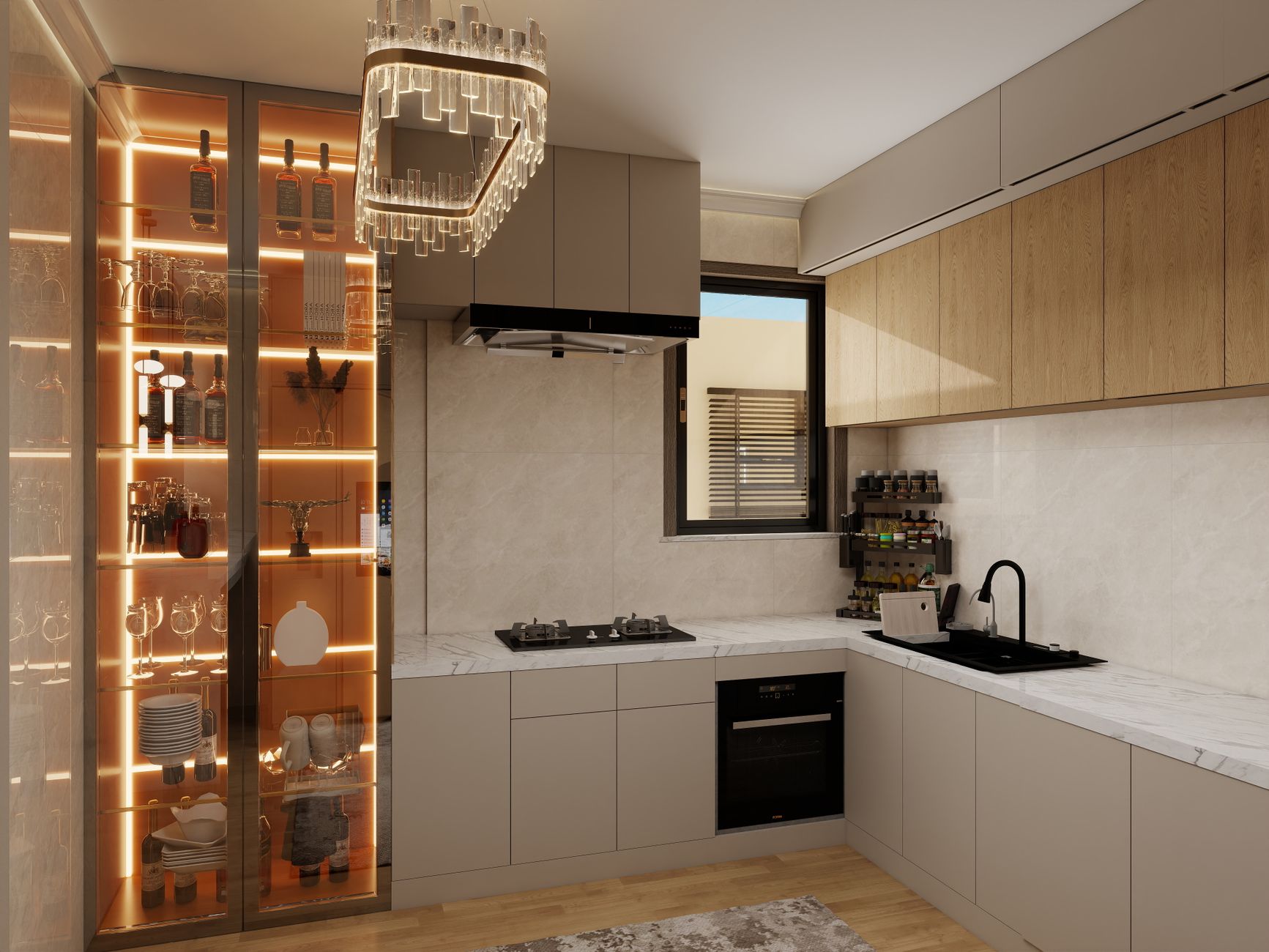
Cabinet doors in an Austin house do not stay where the installer left them. A door that closed with a clean click in March rubs the frame in August, and by January a gap has opened along the top edge. People assume the hinge failed or the house settled. Most of the time the wood moved, and the hardware is doing exactly what it was built to do. This article walks through why doors shift in Austin, TX, how to tell a seasonal change from a real defect, and what a tradesperson does about each one.
Why do cabinet doors change from season to season in Austin?
Wood takes on moisture from the air and gives it back. The humid stretches along the Colorado River and around Lady Bird Lake push a door's moisture content up, and the long dry spells pull it down. A solid wood door or a door frame expands across the grain and barely changes along it, so a rail and stile door grows slightly wider in summer and shrinks in winter while its height stays almost the same.
Air conditioning changes the picture inside the house. A home held at a steady temperature all summer dries the air, so a cabinet in a kitchen can sit drier in July than it did in April. Turn the system off for a week while the family travels and the door swells back. That swing is why the same door can rub in one month and rattle in another.
Sheet goods behave differently. A plywood door barely moves across its face, which is why plywood is the usual choice for large flat slab doors. Mdf moves little with humidity in the face but swells at cut edges if water gets in. Thermofoil and melamine have a plastic skin that hides the movement of the core underneath, and the edge is where the trouble starts.
How can a homeowner tell seasonal movement from a defect?
Seasonal movement is repeatable. The same door rubs in the same spot every humid month and clears in the dry months. A defect does not come and go. A warped door that stays bowed through every season has a built-in stress, usually from a panel that was cut from a poor board or finished on one side only. A door that has dropped because a screw pulled out of the cabinet side stays dropped in every month.
A straightedge settles most questions. Hold a ruler across the back of a door and look for light under it. A bow of more than the thickness of a few sheets of paper is worth watching. A twist, where opposite corners stand off the frame, points to a door that will not settle without a fix.
The reveal, the gap between the door and its neighbor, tells the rest. An even gap that has narrowed on one side is a hinge adjustment. A gap that is wide at the top and tight at the bottom on a door in a run of three is often the cabinet box out of square. Running a level along the face frame separates those two quickly.
What does a euro hinge adjust, and what does it not?
Most modern cabinets use a concealed euro hinge with three adjustment screws. One moves the door in and out from the box, one moves it left and right, and one moves it up and down. A quarter turn of the side screw is often all a rubbing door needs. Overturning a screw is the common mistake, so adjust a little and test the door before touching the next one.
A hinge adjustment fixes position, not shape. It cannot flatten a bowed door or square up a sagging cabinet. A hinge with a soft close damper is more forgiving of small timing differences, but if the door is swelling against the frame, no screw will clear it. At that point the choices are to wait for the dry season, ease the edge with a sharp plane, or replace the door.
Older Austin kitchens, such as those in Hyde Park or Travis Heights, often have inset doors on a face frame, which sit inside the opening with a narrow reveal on every side. Inset doors show seasonal change more than overlay doors because there is almost no room for expansion. A full overlay door, which covers the frame, hides the same movement.
Which finishes and materials resist movement best?
A door finished evenly on both faces and every edge resists moisture swings far better than a door finished on the front only. The finish coat is a moisture barrier as much as a color, so a painted door with a bare back takes on humidity unevenly and curls toward the drier side. Asking whether the back and the edges carry finish is a more useful question than asking about the brand of paint.
A shaker door built with a flat center panel floating in a frame has room to move without cracking the joint. A raised panel door needs the same floating arrangement, and a raised panel that was glued tight into its frame splits the paint at the joint every winter. Hardwood frames in maple, birch or oak move less than softer species, but they still move.
Slab doors in plywood stay flat across the width. A slab door in solid wood, especially a wide one, is prone to cupping, because a wide board has more width to change. Edge banding on a slab door should be continuous, because a lifted corner is where the core begins to take on water.
What about doors that stick only on some mornings?
Doors that stick near a dishwasher or a range are reacting to local steam. A cabinet next to a dishwasher sees a burst of moist air each time the machine vents, and a door beside it can swell for an hour and relax again. A heat shield or a vent strip under the counter reduces the effect. Doors in a bathroom behave the same way after a shower, and a vanity cabinet near a tub swells more than one across the room.
Pantry doors on an exterior wall can sweat in cold snaps, since the wall surface is colder than the room. Cold weather is less frequent around Austin than summer humidity, but a hard freeze every few winters leaves its mark on doors along north walls. A door that behaves differently from its neighbors on the same wall is telling you something about that wall.
When should a loose door or drawer be repaired instead of adjusted?
A door that sags no matter how the hinge is set usually has a stripped screw hole. The cure is to fill the hole with glue and a wooden toothpick or dowel, let it set, and redrive the screw, or to move the hinge to a fresh position. A drawer that drags is a similar story. The drawer slide may be out of alignment, or the drawer box may have swollen at the sides, and one of those needs a screwdriver while the other needs patience.
A dovetail drawer in birch or maple tolerates humidity better than a stapled box in thin board. If the sides of a drawer have swollen and the slide binds, sanding the sides lightly after the humid season passes is better than forcing the drawer. Waxing the runners helps wooden slides, while metal slides want a clean rail and nothing else.
How does this apply to garages and laundry rooms?
An uninsulated Texas garage amplifies every swing. Heat and humidity both climb and fall faster there than in the house, so garage cabinet doors move more and need the most forgiving hardware. A hinge with generous adjustment range and doors of plywood with sealed edges keep a garage cabinet in line through the year. Laundry rooms sit between the two. Steam from the dryer and washer pushes humidity up locally, so laundry cabinets benefit from the same sealed edges as a bathroom vanity.
What is the practical routine?
Check door reveals twice a year, once in the humid months and once in the dry ones. Make small hinge adjustments, one screw at a time, and write down what was changed. Keep the finish intact, because a chipped edge on a door near the sink invites water. If a door stays out of true through a full year, replace it or reface the run, since a door that has taken a permanent set will not recover.
Seasonal movement in Austin is normal and predictable, and a well-built door absorbs it without complaint.